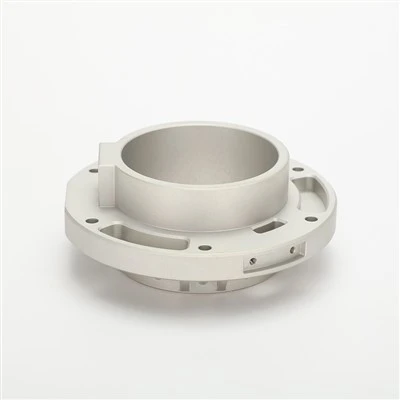
As a supplier of Precision Ceramic Parts, I've witnessed firsthand the remarkable properties and wide - ranging applications of these components. Precision ceramic parts are known for their high hardness, excellent wear resistance, chemical stability, and electrical insulation. However, like any other engineering material, they are also prone to certain failure modes. Understanding these failure modes is crucial for both manufacturers and end - users to ensure the reliability and performance of the products incorporating these parts.
1. Fracture
Fracture is perhaps the most common and well - known failure mode in precision ceramic parts. Ceramics are brittle materials, which means they have a very low ability to deform plastically before breaking. When a ceramic part is subjected to a stress that exceeds its fracture strength, it will fracture suddenly and catastrophically.
There are two main types of fracture in ceramics: brittle fracture and fatigue fracture.
Brittle Fracture
Brittle fracture occurs when a ceramic part is loaded rapidly, and the stress concentration at a flaw (such as a crack, pore, or inclusion) reaches the critical value for crack propagation. These flaws can be introduced during the manufacturing process, such as during sintering or machining. For example, if the sintering process is not well - controlled, pores may form within the ceramic structure. These pores act as stress concentrators, and when the part is loaded, cracks can initiate from these pores and propagate through the material, leading to fracture.
Fatigue Fracture
Although ceramics are generally considered to be less prone to fatigue compared to metals, fatigue fracture can still occur in precision ceramic parts under cyclic loading. Cyclic loading can cause the growth of pre - existing cracks or the initiation of new cracks. Over time, these cracks will grow to a critical size, and the part will eventually fracture. Fatigue fracture in ceramics is often influenced by environmental factors such as humidity and temperature. For instance, in a humid environment, water molecules can react with the ceramic surface, promoting crack growth and reducing the fatigue life of the part.
2. Wear
Wear is another significant failure mode in precision ceramic parts, especially in applications where the parts are in contact with other surfaces and subjected to relative motion. There are several types of wear that can affect ceramic parts, including abrasive wear, adhesive wear, and corrosive wear.
Abrasive Wear
Abrasive wear occurs when hard particles come into contact with the ceramic surface and remove material by cutting or plowing. This can happen in applications such as grinding, machining, or in environments where there are abrasive contaminants. For example, in a precision ceramic bearing used in a dusty industrial environment, the abrasive particles in the dust can cause wear on the bearing surface, leading to a reduction in the bearing's performance and eventually failure.
Adhesive Wear
Adhesive wear occurs when two surfaces are in contact and there is a transfer of material between them due to adhesion. In the case of precision ceramic parts, this can happen when the ceramic part is in contact with a metal or another ceramic surface under high pressure. The adhesion between the surfaces can cause the ceramic material to be pulled off, resulting in wear. Adhesive wear can be reduced by proper surface treatment and the use of lubricants.
Corrosive Wear
Corrosive wear is a combination of chemical corrosion and mechanical wear. In a corrosive environment, the ceramic surface can react with the corrosive medium, forming a corrosion layer. This corrosion layer can be easily removed by mechanical forces, such as friction or abrasion, leading to accelerated wear. For example, in a chemical processing application where a precision ceramic valve is exposed to a corrosive liquid, the valve surface may corrode, and the corrosion products can be worn away by the flow of the liquid, causing failure of the valve.
3. Thermal Shock
Precision ceramic parts often have a relatively low thermal conductivity and a high coefficient of thermal expansion. This means that when they are subjected to rapid temperature changes, large thermal stresses can be generated within the material. If these thermal stresses exceed the fracture strength of the ceramic, the part will crack or fracture, a phenomenon known as thermal shock.
Thermal shock can occur in many applications, such as in high - temperature furnaces, where ceramic parts are heated and cooled rapidly. For example, a ceramic crucible used in a melting process may be heated to a very high temperature and then suddenly cooled. The large temperature gradient between the surface and the interior of the crucible can cause thermal stresses, leading to cracking or even complete failure of the crucible.
4. Creep
Creep is the time - dependent deformation of a material under a constant load. Although ceramics are generally considered to have good creep resistance at room temperature, they can exhibit creep at high temperatures. At elevated temperatures, the atoms in the ceramic material can move more freely, and the material can deform slowly over time.
Creep in precision ceramic parts can be a problem in applications where the parts are subjected to high temperatures and constant loads, such as in gas turbines or high - temperature furnaces. For example, a ceramic turbine blade in a gas turbine may experience creep deformation under the high - temperature and high - stress conditions, which can lead to a change in the blade's shape and a reduction in its performance.
5. Chemical Degradation
Precision ceramic parts can also fail due to chemical degradation. Ceramics can react with various chemical substances in their environment, such as acids, alkalis, and oxidizing agents. These chemical reactions can cause changes in the ceramic's structure and properties, leading to a reduction in its strength and performance.
For example, in a chemical laboratory, a ceramic beaker used to hold an acidic solution may be gradually corroded by the acid. The acid can react with the ceramic material, dissolving some of its components and weakening the structure of the beaker. Over time, the beaker may crack or break, resulting in failure.
As a supplier of Precision Ceramic Parts, we are committed to providing high - quality products that can withstand various operating conditions. We use advanced manufacturing processes and quality control measures to minimize the occurrence of these failure modes. However, it's also important for our customers to understand these failure modes so that they can select the right ceramic parts for their applications and take appropriate measures to ensure their proper use and maintenance.


If you are interested in our Precision Ceramic Parts or have any questions about their application, failure prevention, or other related topics, please feel free to contact us for a procurement discussion. We have a team of experts who can provide you with professional advice and solutions.
In addition to our precision ceramic parts, we also offer a wide range of other precision products, such as Precision Fasteners, Milled Components, Micro Precision Machining, Precision Resistors for Calibration, and Precision Plastic Molding. We look forward to serving you and meeting your precision component needs.
References
- Ashby, M. F., & Jones, D. R. H. (2005). Engineering Materials 1: An Introduction to Properties, Applications, and Design. Butterworth - Heinemann.
- Kingery, W. D., Bowen, H. K., & Uhlmann, D. R. (1976). Introduction to Ceramics. Wiley.
- Rice, R. W. (Ed.). (1990). Fracture Mechanics of Ceramics. Plenum Press.