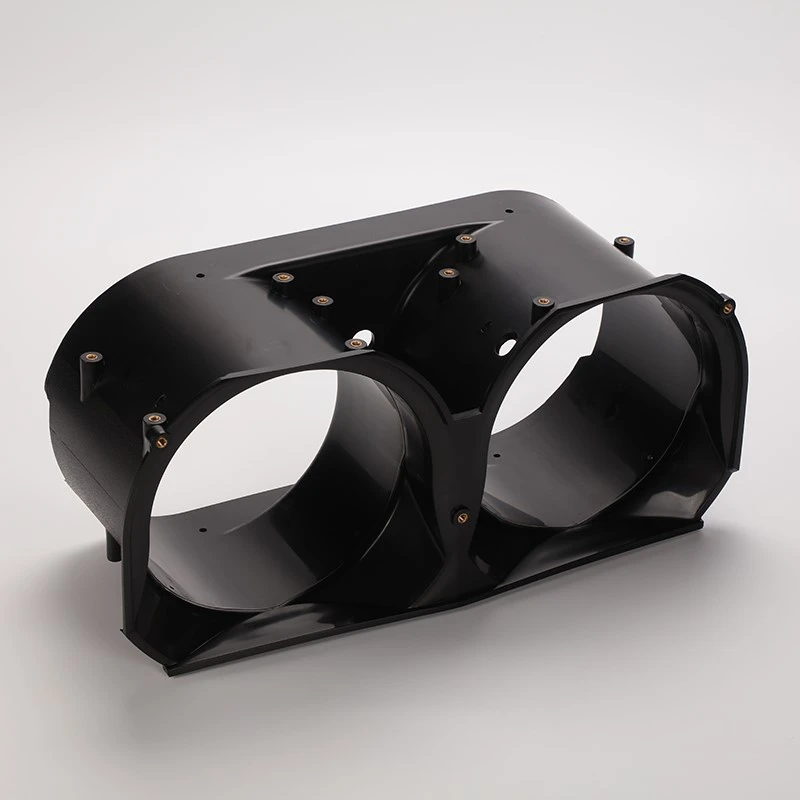
Low Cost Advantage: Raw materials for plastic products are readily available, and the production process is simple and mature, enabling large-scale automated mass production. Overall production energy consumption and equipment investment are low, resulting in final product prices far lower than comparable metal and ceramic products. In some scenarios, the structure can be simplified through component integration, further reducing manufacturing and subsequent maintenance costs.
Durability Advantage: Plastic products possess excellent chemical stability, are not easily corroded by water, acids, or alkalis, and will not rust like metal or rot like wood. They are highly impact-resistant and not easily broken or deformed, with some types having a lifespan of decades. They also have excellent waterproof properties, making them suitable for various complex usage scenarios.
Lightweight Advantage: The density of plastics is far lower than traditional materials, generally only half that of aluminum and one-fifth that of copper. Some foam plastics are even only a fraction of the density of water. This significantly reduces the weight of products, making them convenient for daily carrying and use, reducing transportation energy consumption, and improving energy efficiency in the automotive and aerospace industries through weight reduction.